
Many plant species depend on animals to disperse their seeds and colonise new habitats. With the increasing loss of animal species, there is a huge concern about how this might affect seed dispersal. A recent study by Mendes and collaborators shows that there are indeed reasons to be concerned, as many of the seed dispersers are endangered to some extent.
By reviewing over 50,000 scientific papers in 26 languages, the team mapped out which animals spread the seeds of which plants across Europe. They discovered over 11,000 interactions between 1,902 plant and 455 animal species, from ants and other arthropods to birds and mammals.
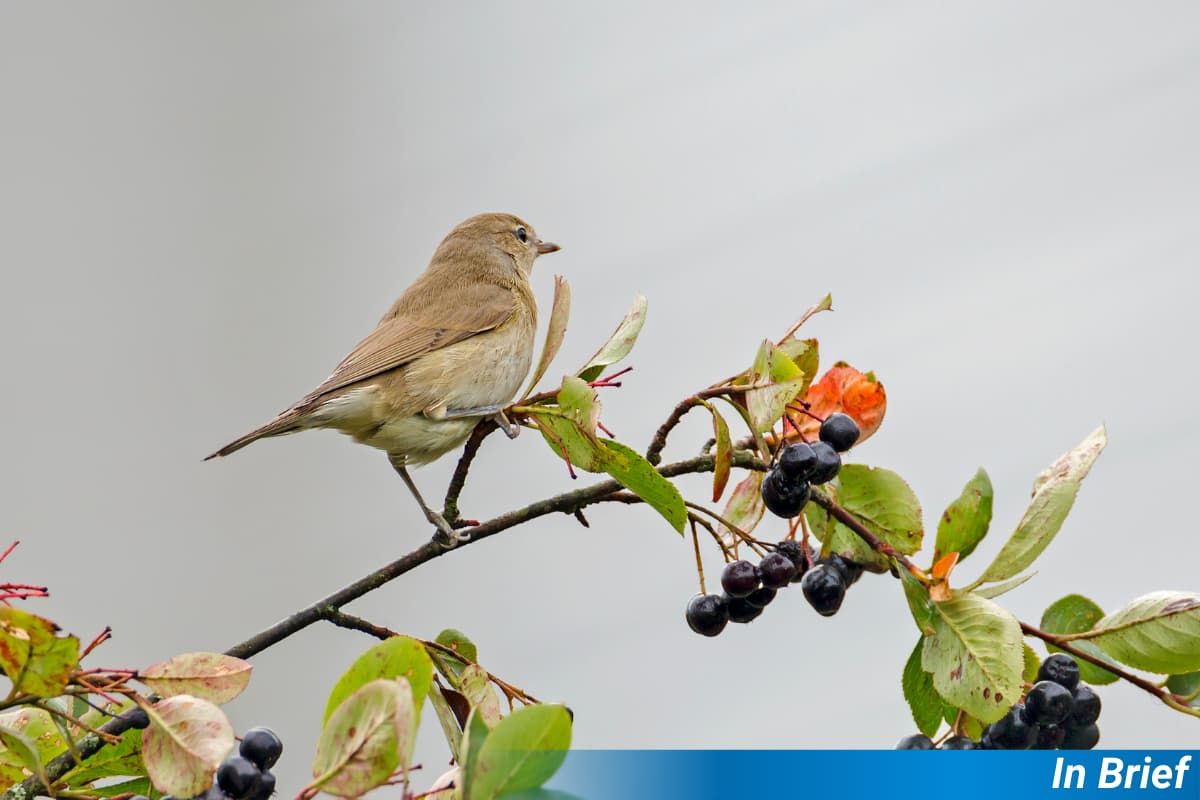
The researchers found that about one in three interactions between plants and dispersers is at high risk. This trend was consistent for all European biomes, with at least one-third of their dispersers reporting declining populations. For instance, several of the animal species that exhibited the highest number of interactions and plant species that dependent on them for dispersal were classified as a high concern, including the garden warbler (Sylvia borin), the European bison (Bison bonasus) and the European red wood ant (Formica polytecna).
The work by Mendes and her colleagues provides a compelling case for the urgent need to take action to preserve European dispersers. Such initiatives will be fundamental for plant survival under changing climates, as plants depend on dispersers to help their seeds reach new suitable habitats.
Mendes, S.B., Olesen, J.M., Memmott, J., Costa, J.M., Timóteo, S., Dengucho, A.L., Craveiro, L., & Heleno, R. (2024). Evidence of a European seed dispersal crisis. Science, 386(6718), 206-211. http://doi.org/10.1126/science.ado1464 ($)