



Plants are incredibly diverse, and so are botanists! In its mission to spread fascinating stories about the plant world, Botany One also introduces you to the scientists behind these great stories.
Today, we have, Dr Juliane Ishida, a professor at the Department of Genetics at the University of São Paulo (USP, Brazil). She holds a double bachelor’s degree in Biology and in Molecular Sciences, both from USP, and earned two master’s degrees—one from USP and another from the University of Tokyo, where she also completed her Ph.D. specializing in phytopathology. Since 2008, Ishida’s research has focused on parasitic plants, aiming to uncover the evolutionary, molecular, and physiological mechanisms behind such interactions. Her work explores key questions, including: How do parasitic plants recognize and choose their hosts? What molecular signals mediate this interaction? How does this relationship affect the biology of both the parasite and the host? Moreover, she also investigates how environmental factors—like temperature and light—impact parasitism. You can follow her lab and research updates on Instagram (@livelab_).

What made you become interested in plants?
My grandmother. Despite not finishing elementary school and barely being able to read or write, she was one of the most knowledgeable people about plants I have ever met. Every time I visited her, I learned something new—the life cycle of plants, how to cultivate them, which species thrive in sunlight or shade, which plants have medicinal properties and how to use them properly. Her deep, practical knowledge sparked my curiosity and inspired me to seek scientific explanations for the things she taught me.
Later, as I considered a research career, I realized I also had a strong love for animals. However, working with them often involves invasive methods or even sacrificing them—something I knew I couldn’t do. Plants, on the other hand, offered a way to explore life sciences meaningfully, while still pursuing fascinating biological questions. That combination of emotional connection and scientific curiosity led me to plant research.
What motivated you to pursue your current area of research?
My advisor was the key motivation behind my current research area. When I moved to Japan, I was initially expected to study a specific plant defence mechanism—the hypersensitive response, which leads to the death of plant cells infected by pathogens. However, my path shifted when he introduced me to parasitic plants.
In our first meeting, he carefully explained all the ongoing projects in his lab. As the last topic, he mentioned parasitic plants. He said that very few researchers around the world study them, and that there was a real need to train new scientists in this field. At the time, only one postdoctoral researcher in the lab was working on parasitic plants, and he assured me that she would patiently teach me and that we could work together.
The topic immediately sparked my curiosity—not only because it’s a biologically fascinating system involving complex communication between two plant species, but also because it’s still largely underexplored. On top of that, parasitic plants have a major impact on agriculture, causing over a billion dollars in crop losses each year in Africa alone. Working on a subject with such clear economic relevance also strengthens the case when applying for research funding, making the work both intellectually exciting and strategically important.
What is your favourite part of your work related to plants?
I think I can expand this question to what is my favourite part of being a scientist. I would divide it into stages. In the beginning of my career, it was all about discovery—working at the edge of human knowledge and seeing something for the first time that no one else in the world had seen. That is an incredible feeling. Later, I realized that writing a scientific paper allowed me to leave a lasting contribution—even after I’m gone, my work could continue to support other researchers and expand the world’s understanding. Now, as a principal investigator, my favourite part is seeing the joy of discovery in my students’ eyes. I truly love hearing a knock on my door and finding a student eager to show me their new data. They come in with shining eyes and a big smile, excited about what they’ve just found. That moment—the spark of curiosity and excitement—is incredibly rewarding to me.
Are any specific plants or species that have intrigued or inspired your research? If so, what are they and why?
Yes—Phtheirospermum japonicum. As you know, answering specific biological questions can be extremely difficult with plants that don’t grow well under lab conditions. My PhD advisor suggested working with P. japonicum because it had the potential to become a model organism for studying parasitism. Together with other lab members, I helped develop protocols and genetic tools to make this plant viable for in-depth molecular research.
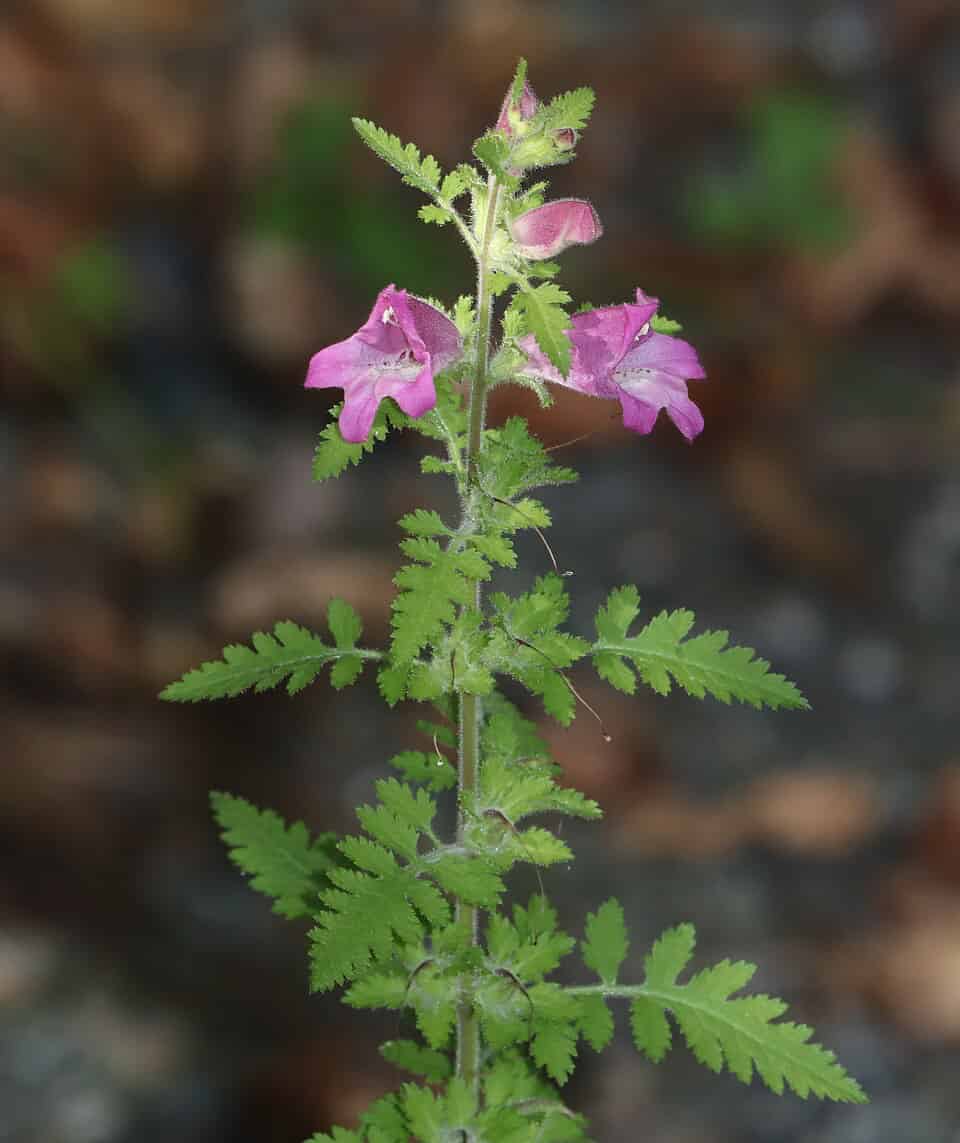
I vividly remember submitting my first paper as first author in 2010, describing a protocol for its genetic transformation. The journal editor rejected it, saying he had Googled the plant’s scientific name and found only four results—three of them in Chinese. He concluded the topic was not relevant to the scientific community. I was devastated. But my advisor encouraged me, saying the editor lacked vision: “Does everyone in plant biology really have to work on Arabidopsis?” he asked. We resubmitted the paper elsewhere, and for the next 10 years, it was the most cited publication of my career. Today, searching Phtheirospermum japonicum yields over 9,000 results, and it’s one of the main model plants in parasitic plant research. I’m proud to have contributed to its early development.
Could you share an experience or anecdote from your work that has marked your career and reaffirmed your fascination with plants?
I think, besides the episode I mentioned above, one experience that truly marked my career happened during a scientific meeting. I’m a very shy person, so during the social cocktail, I made an effort to join a conversation with a group of people—and to my surprise, they knew me. I mean, they recognized my name and my work. They were researchers from Madagascar. I had never imagined that my research with plants could reach people so far away, especially those I had never met or even expected to connect with. As scientists, especially in developing countries, we sometimes question the relevance of our work. With so many urgent needs in health care, we might feel that being a doctor or nurse is more impactful. But this moment reminded me that even research from a small lab can travel far and make a difference in unexpected places. It was incredibly rewarding and reaffirmed my belief in the importance of what I do.
What advice would you give young scientists considering a career in plant biology?
Don’t pursue a PhD just because it’s difficult to find the job you really want. If doing a doctorate is simply your backup plan, then it’s probably not the right path for you. A PhD is something you should commit to only if you truly feel passionate about it—if you’re genuinely curious about nature and the scientific process.
For those already in a PhD program, make the most of this unique time. Ask every question that comes to mind, even the ones you think might sound silly. No one expects you to know everything now—but after you earn your PhD, that expectation will change. So take advantage of the opportunity to learn as much as possible from those around you.
And when you need to do something new, don’t waste time trying to reinvent the wheel. Ask someone who already knows how to do it. Learning from experienced peers or mentors will save you time, frustration, and help you grow faster as a scientist.
What do people usually get wrong about plants?
People often mistakenly believe that epiphytic plants are parasites—but they’re not. We consider a plant to be parasitic only when it forms a vascular connection with another plant to extract water and nutrients. Another common misconception involves mycoheterotrophic plants. These plants connect to fungi, which in turn are associated with other plants. The fungi—often mycorrhizal—act like a pipeline between the two, creating an indirect nutritional link. While some may call this parasitism, it’s actually a gray area. Since there’s no formation of a haustorium (the specialized structure used by parasitic plants to penetrate host tissues), these plants are generally not classified as true parasites. So, the main misunderstanding lies in overgeneralizing any plant that “lives on another” as a parasite, without considering the actual biological mechanisms involved.
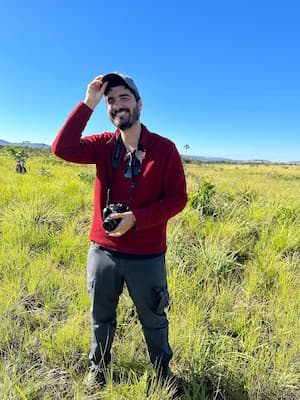
Carlos A. Ordóñez-Parra
Carlos (he/him) is a Colombian seed ecologist currently doing his PhD at Universidade Federal de Minas Gerais (Belo Horizonte, Brazil) and working as a Science Editor at Botany One and a Communications Officer at the International Society for Seed Science. You can follow him on BlueSky at @caordonezparra.


