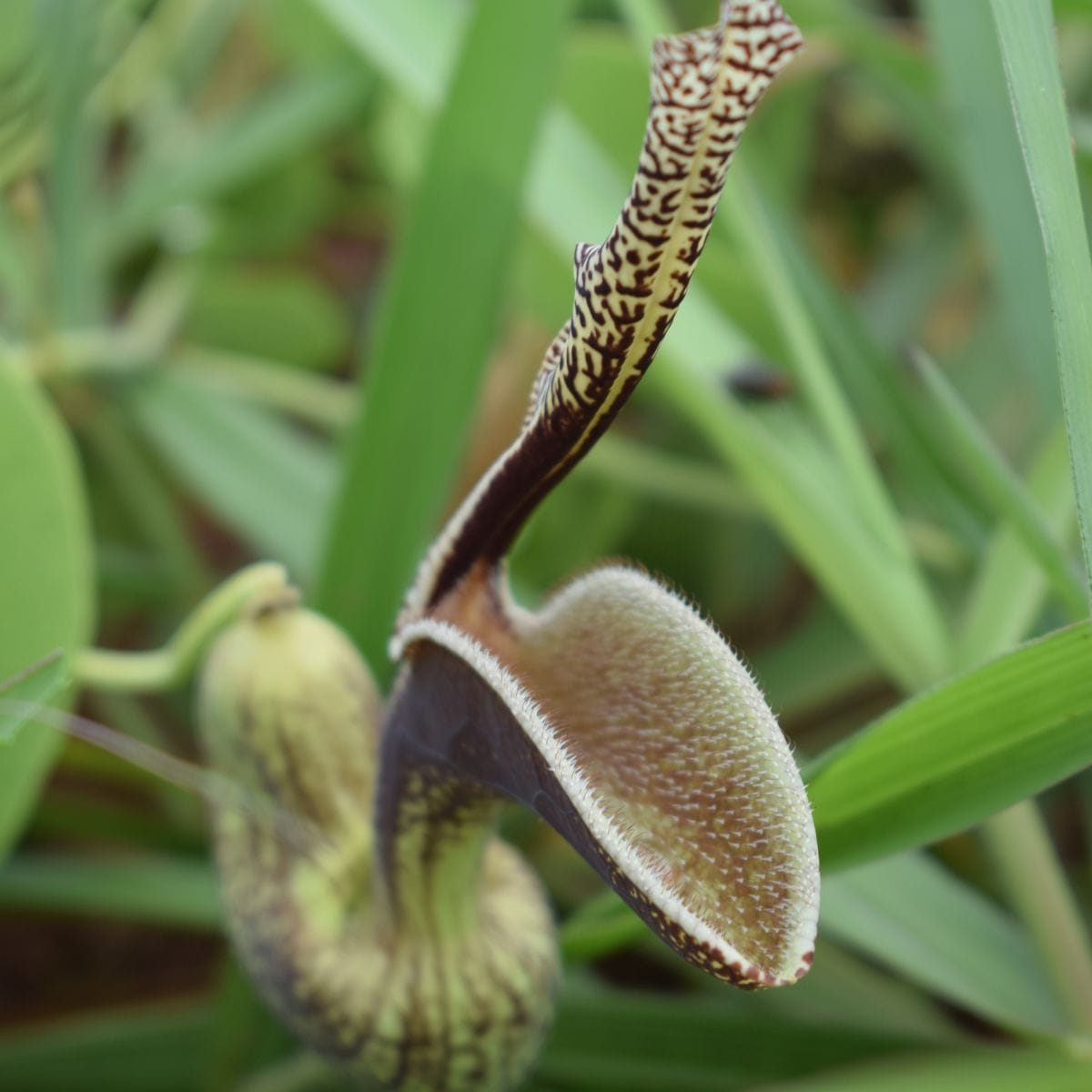



When we think of pollination, different stories come to mind of animals visiting flowers in search of pollen, nectar or other resources. In these stories, we usually see pollinators freely visiting different flowers, attracted by their vibrant colours, exquisite aromas or sweet nectar. But Aristolochia rewrites the script: these flowers lure in pollinators with false promises and then trap them inside just long enough for pollination to take place.
The flowers of Aristolochia are pollinated by flies. The flies are attracted by the smell of decaying flesh they produce, mimicking the sites where these insects feed or lay their eggs. As they advance in the pipe-like structure of these flowers, flies cannot fly back outside, forcing them to keep advancing until they reach the chamber where the pollen- and ovule-bearing structures can be found. To build this one-way road, different authors have suggested that flowers rely on specialized hair-like structures on their surfaces that prevent pollinators from moving freely. Still, no study to date has provided experimental evidence on how these structures influence pollen removal and fruit production — two main processes that indicate to us how effective pollination is.
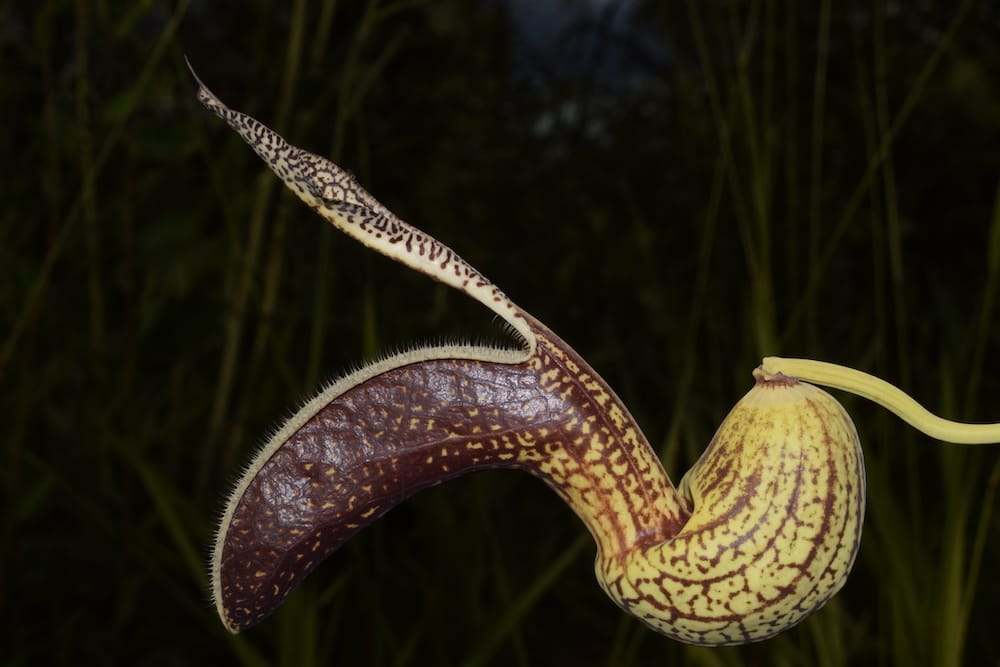
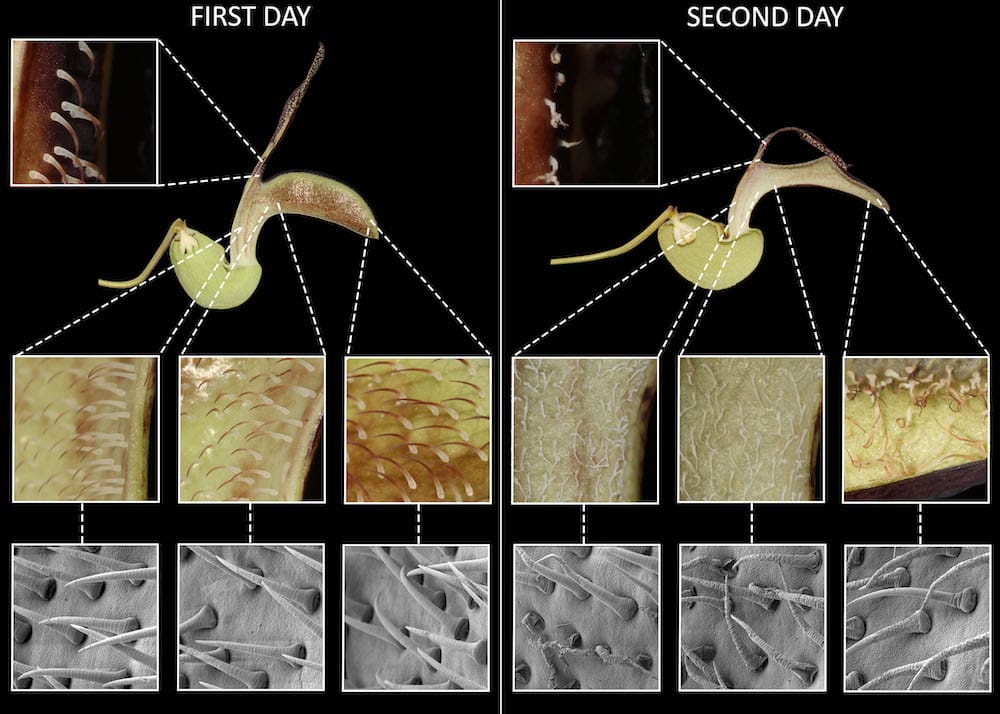
A new study by Carlos A. Matallana-Puerto investigates how specialised hairs called “trapping trichomes” ensure pollination in Aristolochia esperanzae, a species from the Brazilian Cerrado. First, they observed how the flowers changed from when they first opened to the moment pollinators exited the flower, focusing on when pollen- and ovule-bearing structures became active and whether there were any changes in the trapping trichomes. The team also assessed the density of trapping trichomes in the different parts of the flowers. This detailed description allowed researchers to compare their structure and distribution within the whole flower.
Finally, the researchers tested whether these trichomes were indispensable for capturing pollinators. To do this, they removed the trichomes from some flowers and observed how many flies entered and became trapped, and whether this differed from flowers left unaltered. Additionally, they examined how the presence or absence of trichomes affected how many pollen grains remained in flowers after pollinators’ visits and how many fruits were produced by trichome-free and unaltered flowers.
Each Aristolochia esperanzae flower lasted for about 30 hours and since the moment they reach maturity the ovule-bearing structures are already active. At this point, the pollinators that enter the flower are unable to escape the flower interior, as the way forward is increasingly covered with densely-packed trapping trichomes that point inwards and are coated with wax —a return journey that is virtually impossible for pollinators to navigate. After 24 hours, pollen is presented, and only three hours after that, the trapping trichomes wither, opening an escape route to trapped pollinators. In the meantime, the flies trapped inside the flower interact with the flower anthers and leave the flower covered in pollen. As a result, trapping trichomes force pollinators to remain inside the flower until the pollen is presented.
The trapping function of these trichomes was corroborated by the authors’ experiments, as with trichomes intact, nearly half of visiting flies remained trapped, whereas flowers without them held over seven times fewer trapped pollinators. The authors also noted that this trapping system directly influences the plant’s reproductive success. Flowers with trichomes had far fewer pollen grains left after flower wilting, suggesting successful pollen export. Most importantly, only these flowers produced fruit, confirming that successful pollination in Aristolochia esperanzae depends entirely on its hairy trap.
Field recordings show how pollinators get trapped in flowers with trichomes, while those visiting flowers without trichomes manage to escape.
Similar trapping mechanisms are found in carnivorous pitcher plants, which use downward-facing hairs and wax coatings to prevent their prey from escaping. But while carnivorous plants trap insects for food, Aristolochia esperanzae does it to ensure its reproduction. This study led by Matallana-Puerto provides the first unequivocal evidence of the trapping role of these trichomes, revealing how tiny floral structures can drive sophisticated pollination mechanisms that ensure that pollinators are at the right place and time — even if plants leave them no with no other option.
READ THE ARTICLE:
Matallana‐Puerto, C.A., Brito, V.L., Kuster, V.C., Oliveira, P.E. and Cardoso, J.C., 2024. Sex, flies and flower trap: Trapping trichomes and their function in pollination. Functional Ecology, 38(10), pp.2261-2270.
Carlos A. Ordóñez-Parra
Carlos (he/him) is a Colombian seed ecologist currently doing his PhD at Universidade Federal de Minas Gerais (Belo Horizonte, Brazil) and working as a Science Editor at Botany One and a Communications Officer at the International Society for Seed Science. You can follow him on Bluesky at @caordonezparra.
Cover picture: Aristolochia esperanzae by Carlos A. Matallana-Puerto.


